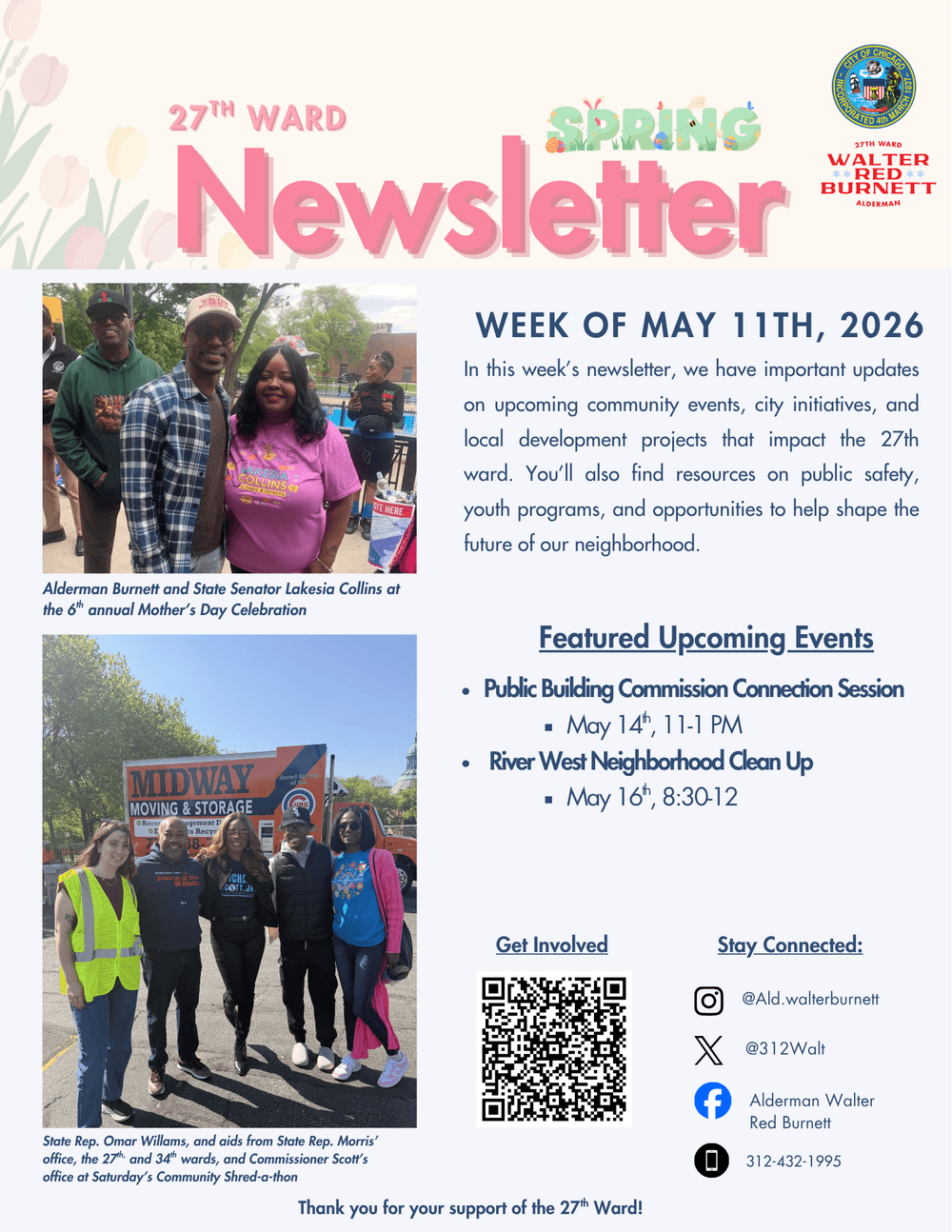
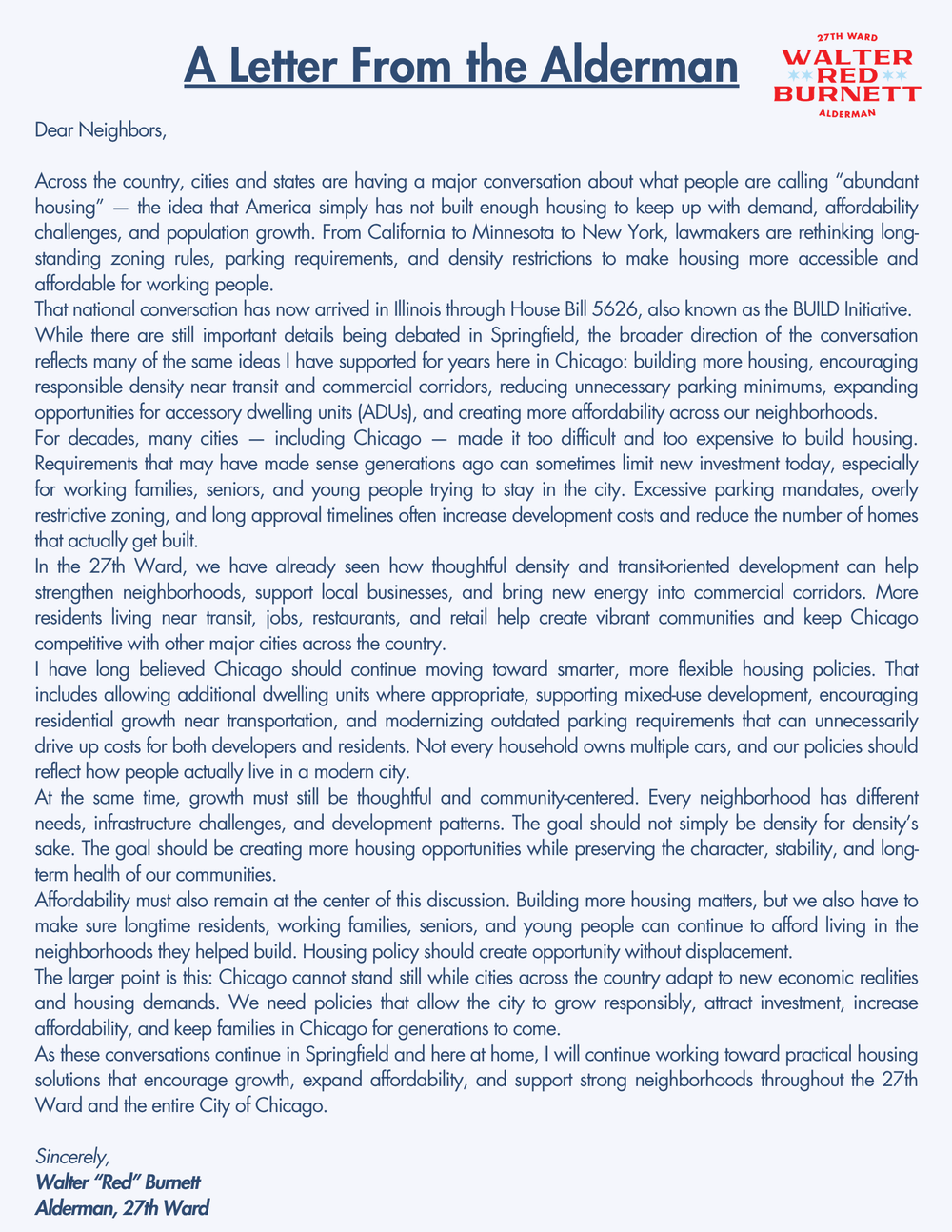
Welcome to the 27th Ward Newsletter! Dear Neighbors, Across the country, cities and states are having a major conversation about what people are calling “abundant housing”; the idea that America simply has not built enough housing to keep up with demand, affordability challenges, and population growth. From California to Minnesota to New York, lawmakers are rethinking long-standing zoning rules, parking requirements, and density restrictions to make housing more accessible and affordable for working people. That national conversation has now arrived in Illinois through House Bill 5626, also known as the BUILD Initiative. While there are still important details being debated in Springfield, the broader direction of the conversation reflects many of the same ideas I have supported for years here in Chicago: building more housing, encouraging responsible density near transit and commercial corridors, reducing unnecessary parking minimums, expanding opportunities for accessory dwelling units (ADUs), and creating more affordability across our neighborhoods. For decades, many cities, including Chicago, made it too difficult and too expensive to build housing. Requirements that may have made sense generations ago can sometimes limit new investment today, especially for working families, seniors, and young people trying to stay in the city. Excessive parking mandates, overly restrictive zoning, and long approval timelines often increase development costs and reduce the number of homes that actually get built. In the 27th Ward, we have already seen how thoughtful density and transit-oriented development can help strengthen neighborhoods, support local businesses, and bring new energy into commercial corridors. More residents living near transit, jobs, restaurants, and retail help create vibrant communities and keep Chicago competitive with other major cities across the country. I have long believed Chicago should continue moving toward smarter, more flexible housing policies. That includes allowing additional dwelling units where appropriate, supporting mixed-use development, encouraging residential growth near transportation, and modernizing outdated parking requirements that can unnecessarily drive up costs for both developers and residents. Not every household owns multiple cars, and our policies should reflect how people actually live in a modern city. At the same time, growth must still be thoughtful and community-centered. Every neighborhood has different needs, infrastructure challenges, and development patterns. The goal should not simply be density for density’s sake. The goal should be creating more housing opportunities while preserving the character, stability, and long-term health of our communities. Affordability must also remain at the center of this discussion. Building more housing matters, but we also have to make sure longtime residents, working families, seniors, and young people can continue to afford living in the neighborhoods they helped build. Housing policy should create opportunity without displacement. The larger point is this: Chicago cannot stand still while cities across the country adapt to new economic realities and housing demands. We need policies that allow the city to grow responsibly, attract investment, increase affordability, and keep families in Chicago for generations to come. As these conversations continue in Springfield and here at home, I will continue working toward practical housing solutions that encourage growth, expand affordability, and support strong neighborhoods throughout the 27th Ward and the entire City of Chicago. Sincerely, Walter “Red” Burnett Alderman, 27th Ward |